2Who Should Hold the Card: Picking One Payer
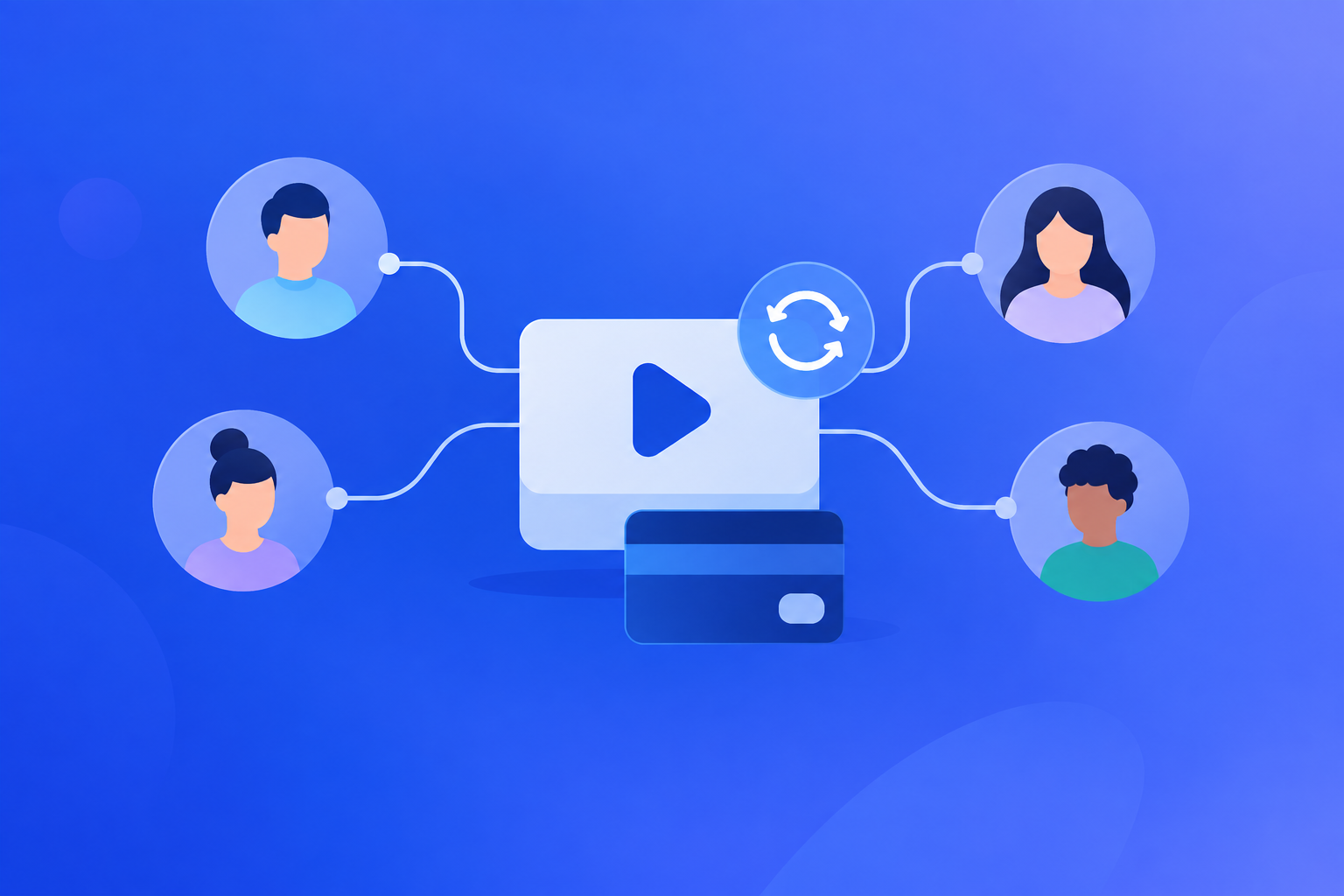
Every shared subscription needs exactly one payment method attached to it, which means exactly one person is on the hook if that charge fails. Choosing who that person is matters more than most groups think about upfront.
Pick whoever is least likely to switch banks, close a card, or move in the near future, since any of those can knock the subscription out for the entire group without warning. A credit card is usually a better fit for this role than a debit card, since a failed charge on a debit card can trigger an overdraft on top of the missed payment.
Example scenario: four roommates split a streaming plan and a music plan between them. One roommate's credit card is on file for both. Everyone else sends their share the same day the charge posts, so the payer never has to front the money for more than a few hours before it evens out.
A shared subscription is really one person's payment method holding up everyone else's access, so the moment that one card has a problem, the whole group feels it at the same time.
3When a Family Plan Actually Saves You Money
A family or group plan does not automatically save money just because it exists. It only saves money if the people splitting it are actually using the service. A plan carrying two or three inactive members costs the active users more than they think, even if the total bill looks smaller than everyone paying separately.
Example scenario: a household of five splits a family plan five ways. Two of them barely open the app anymore. If those two dropped off and the remaining three split the same plan, or moved to a smaller plan, each active person could end up paying less than they currently do carrying two inactive slots.
Before assuming a family plan is the better deal, do the math with real numbers: the family plan's total cost divided by the people who actually use it, compared against what an individual plan would cost each of those same people on their own.
4Setting Up a Fair Way to Split the Cost
The easiest system is also the most common one: split the total evenly and collect it the same day the subscription charges. Waiting until "sometime this month" to settle up is how a five-dollar share turns into a forgotten debt three months later.
For annual plans, this matters even more, since the charge only happens once a year and is easy for everyone to lose track of, including whoever is collecting the money. Our guide on tracking annual subscription renewals covers why yearly charges are the easiest ones to forget, which applies just as much to a shared annual plan as a personal one.
A payment app like Venmo or PayPal works well for the money side, since it keeps a record of who has paid and who has not. Send the request the moment the charge posts, with the exact amount and the service name, rather than a vague reminder days or weeks later.
5What Happens When Someone Leaves the Plan
Groups change. A roommate moves out, a family member sets up their own account, or someone simply stops wanting to split the cost. When that happens, remove them from the plan and recalculate what everyone remaining owes, rather than letting the old split quietly continue.
It gets more complicated if the person leaving is the one whose card is on file. In that case, someone else needs to take over as the payer and update the payment method before the old card is closed or removed, not after. If that handoff does not happen in time, the subscription can fail to renew for the entire group, not just the person who left.
This is closely related to what happens when any payment method on a shared plan changes unexpectedly. Our guide on what happens to subscriptions when your card is replaced walks through the checklist to run so a lost, expired, or reissued card does not quietly break a plan several people are relying on.
6Handling a Price Increase Without a Fight
When a shared subscription's price goes up, the payer usually finds out first, through an email or an in-app notice the rest of the group never sees. If that new price is not communicated before the next charge, everyone ends up sending the old amount, and the payer is left covering the gap.
Quick tip: whoever holds the card should forward the price increase notice to the group as soon as it arrives, with the new per-person amount already worked out. For more on how these notices work and how to catch them early, see our guide on catching a subscription price increase before it bills you.
A price increase is also a natural moment to double-check that everyone on the plan still wants to keep paying for it. It costs nothing to ask, and it is easier to have that conversation before the new price hits than after someone is surprised by a bigger request.
7When Sharing a Subscription Isn't Worth It
Sharing a subscription is not automatically the right move just because it is cheaper on paper. If one person consistently forgets to pay their share, the small savings stop being worth the repeated awkward reminders, and it may be simpler for that person to have their own individual plan instead.
Did you know? Some services define a family or household plan strictly, meaning everyone on it is expected to live at the same address or meet specific eligibility rules. Sharing a plan with people outside those terms can put the whole account at risk if the service checks and finds it does not meet the requirements. Always check the specific plan's terms before setting one up with roommates or extended family who do not live together.
If the group keeps growing, shrinking, or arguing over who owes what, it is often less stressful for each person to hold their own subscription and skip the splitting altogether, even if it costs a little more per month.
8How to Track Every Shared Subscription in One Place
Most of the friction in splitting a subscription comes down to one thing: whoever is collecting the money does not have a clear, running list of what is shared, how much it costs, and when it renews. Keeping that information in your head, or scattered across old messages, is exactly how a shared plan turns into a source of tension.
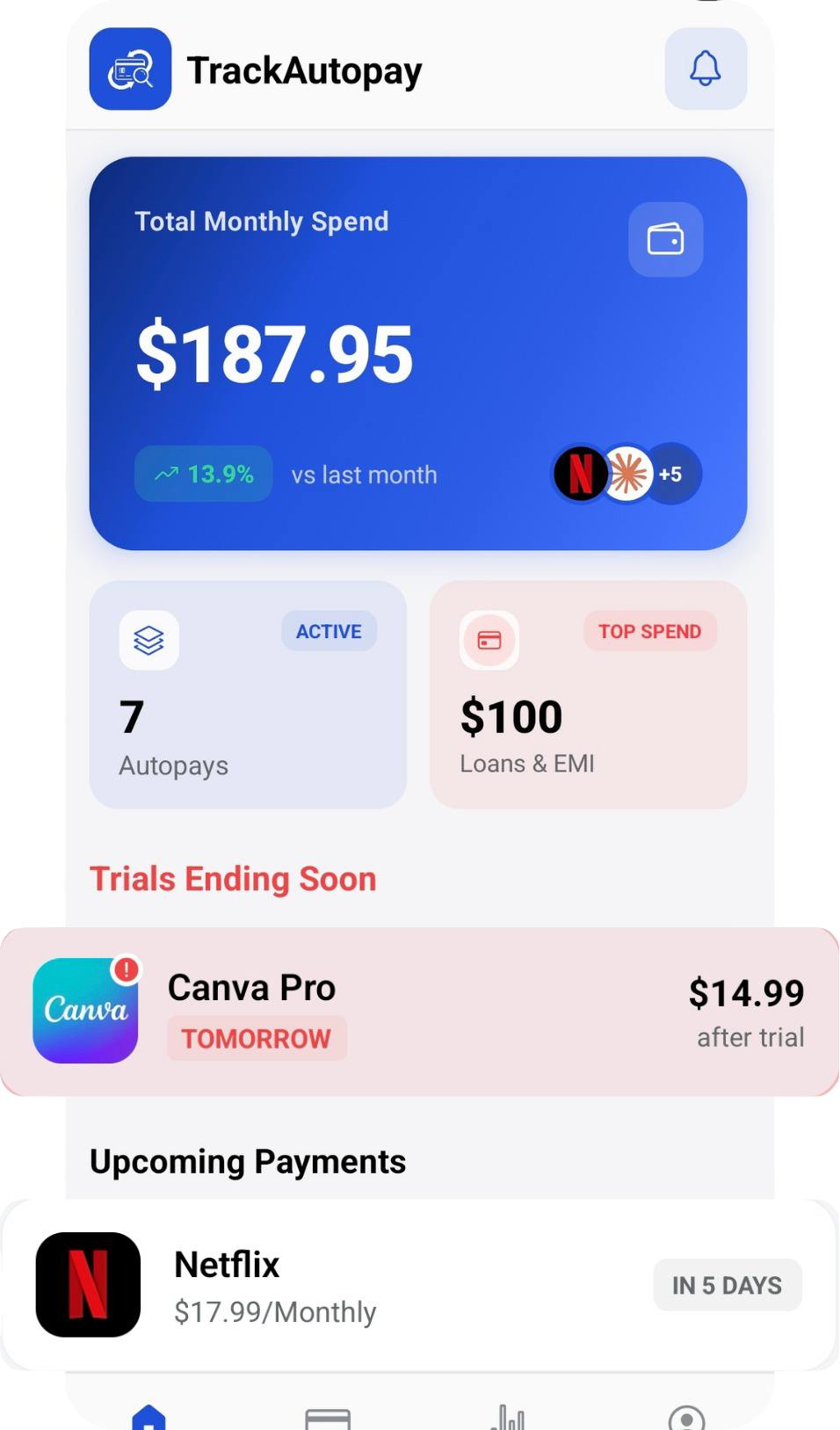
TrackAutoPay gives you one dashboard for every subscription's renewal date and amount, personal or shared, with a reminder before each one bills. That means you always know exactly when a shared charge is coming and how much to collect, instead of trying to remember it after the fact.
Never Chase Down a Shared Payment Again
Log every subscription, shared or personal, in one place with a reminder before each renewal, so collecting from the group is never a guessing game.