1Why It's Cheaper to Discount You Than Lose You
You open your subscription settings, tap cancel, and instead of a confirmation screen, you get a question: "Can we offer you a discount to stay?" This is not an accident or a glitch. It is a deliberate step built into the cancellation flow of most large subscription businesses, and it exists for a simple reason: finding a brand new paying customer costs a company far more than keeping one who is already halfway out the door.
From the company's side, a subscriber who is actively trying to leave has already told them exactly what they need to know, that the current price is no longer worth it to that person. Rather than lose the whole subscription, offering a lower price for a few months is often the cheaper outcome, even if it means earning less from you than before.
As more people work through years of accumulated subscriptions and actively try to cut their monthly bills, more companies have leaned harder into these save screens to slow down that churn. What used to be mostly a cable and phone company tactic now shows up across streaming, software, meal kits, and fitness apps too.
Did you know? A retention offer is a separate, purpose-built screen in the cancellation flow, not a discount the company was already planning to give you. It only appears because you told the service you were leaving, which is worth remembering the next time you assume a subscription's listed price is the lowest it will ever go.
2#1: How a Retention Offer Flow Actually Works
Most retention flows follow a similar shape, even though the screens look different from one company to the next. You tap cancel, and instead of an immediate confirmation, you are asked why you are leaving, with options like "too expensive," "not using it enough," or "found a better alternative."
Example scenario: a subscriber opens a streaming app to cancel and selects "too expensive" as the reason. The next screen offers a lower price for the next few billing cycles instead of processing the cancellation right away. Declining that offer sometimes leads to a second screen, maybe a free pause option or a cheaper plan tier, before the cancellation actually goes through.
The reason you selected matters. Answering "too expensive" is far more likely to trigger a discount offer than "found a better alternative," since the second answer tells the company a lower price probably will not change your mind anyway.
3#2: The Most Common Retention Tactics You Will See
A temporary discount is the most familiar tactic, but it is not the only one. A free pause, which stops billing for a set number of months without fully closing your account, is another common option, useful if you genuinely plan to come back but do not want to pay while you are away.
A downgrade to a cheaper tier is another route, keeping you as a paying customer at a lower monthly amount instead of losing you entirely. Some flows also show a reminder screen listing what you will lose access to, which is a persuasion tactic rather than a discount, meant to make the cost of leaving feel higher than it is.
Example scenario: a subscriber trying to cancel a premium software plan is told the only way to complete the cancellation is to schedule a call with a retention specialist. The call itself is often where the strongest discount gets offered, since a live conversation gives the company far more room to negotiate than an automated screen does.
None of these tactics are automatically unfair on their own. A company offering you a genuine discount to stay is normal business behavior. Where it becomes a problem is covered further down.
4#3: Is the Discount Actually Worth Taking?
The honest answer depends on why you were canceling in the first place. If you still use the service regularly and price was your only objection, a genuine discount is a real win, you keep something you value at a lower cost, with nothing lost.
If you had already decided you do not use the service enough to justify it, a temporary discount does not fix that. It just delays the decision and quietly extends how long you keep paying for something you do not need, which is exactly the pattern behind a lot of subscriptions people forget they are paying for. A discounted price you stop noticing is still money leaving your account every month.
Quick tip: before accepting any offer, ask the company directly what the price reverts to and when. If you cannot get a clear answer on both, treat that as a sign the offer is designed to be forgotten, not evaluated.
5#4: Can You Get an Offer Without Starting to Cancel?
Sometimes. Older-style subscriptions like cable, phone, and internet plans have a long history of support agents having room to offer a loyalty discount to anyone who calls and simply asks, without ever starting a formal cancellation.
Digital subscriptions are less consistent. Many retention offers are tied specifically to the automated cancellation flow and its "reason for leaving" question, so a chat message asking for a discount outside that flow may get you nothing, or may get routed to the same offer anyway. It is worth trying before you cancel, since asking costs you nothing, but do not expect it to work everywhere.
Note: if a company does offer a discount just for asking, get the new price and the date it reverts in writing, an email confirmation or a chat transcript, before you consider the conversation settled.
6#5: When a Retention Flow Crosses a Line
Offering you a discount to stay is not, by itself, a dark pattern. It becomes one when the flow is built to make canceling harder than signing up was, hiding the actual cancel option behind several screens of offers, requiring a phone call when sign-up only took a few taps, or making the cancel button visually harder to find than the "keep my subscription" button next to it.
Regulators in several countries, including the US, UK, and EU, have each said publicly that a cancellation process should not require meaningfully more effort than the sign-up process did. Our guide on the FTC's click-to-cancel rule covers where that specific US rule stands today and what other consumer protection laws still apply even without it in force.
Note: if you ever feel a company is refusing to let you cancel at all, not just offering you a discount but genuinely blocking the process, that is worth escalating, either by disputing the next charge with your bank or reporting the company to a consumer protection agency in your country.
The moment a company offers you a discount to stay, it has admitted something it never volunteered before: the price you were paying a moment earlier had room to fall.
7#6: A Simple Script for the Cancellation Call
Walking into a cancellation call or chat with a plan makes the whole process faster and keeps you in control of the outcome, instead of reacting to whatever screen or agent you happen to get.
Step 1: Decide before you start whether you are open to a discount. If you are not, say so plainly, "I want to cancel," rather than "how can I lower my bill," which invites a longer retention conversation you did not want.
Step 2: If you are open to staying at a lower price, give the real reason. Selecting or saying "too expensive" is what actually triggers most discount offers, so a vague or unrelated reason may skip past the offer entirely.
Step 3: Get the exact new price and its end date before accepting anything. A discount without a clear reversion date is a discount you cannot plan around.
Step 4: Ask directly whether the price reverts automatically. Assume the answer is yes unless the company tells you otherwise in writing, since that is how almost every retention discount works.
Step 5: If you decline every offer, get a confirmation. Ask for the exact cancellation date and a confirmation number or email before you end the call or close the chat.
8#7: Track the Discount So It Doesn't Quietly Expire
Accepting a retention offer solves today's problem and quietly creates a new one: a price that is scheduled to jump back up on a date you are unlikely to remember. Your bank statement will not flag the change, it will just show a higher number than the one you got used to, on a line item you have long since stopped paying attention to.
This is the same pattern behind regular subscription price increases, except a retention discount has a firmer, pre-scheduled end date instead of a vague future increase, which makes it easier to plan for if you actually write the date down somewhere you will see it.
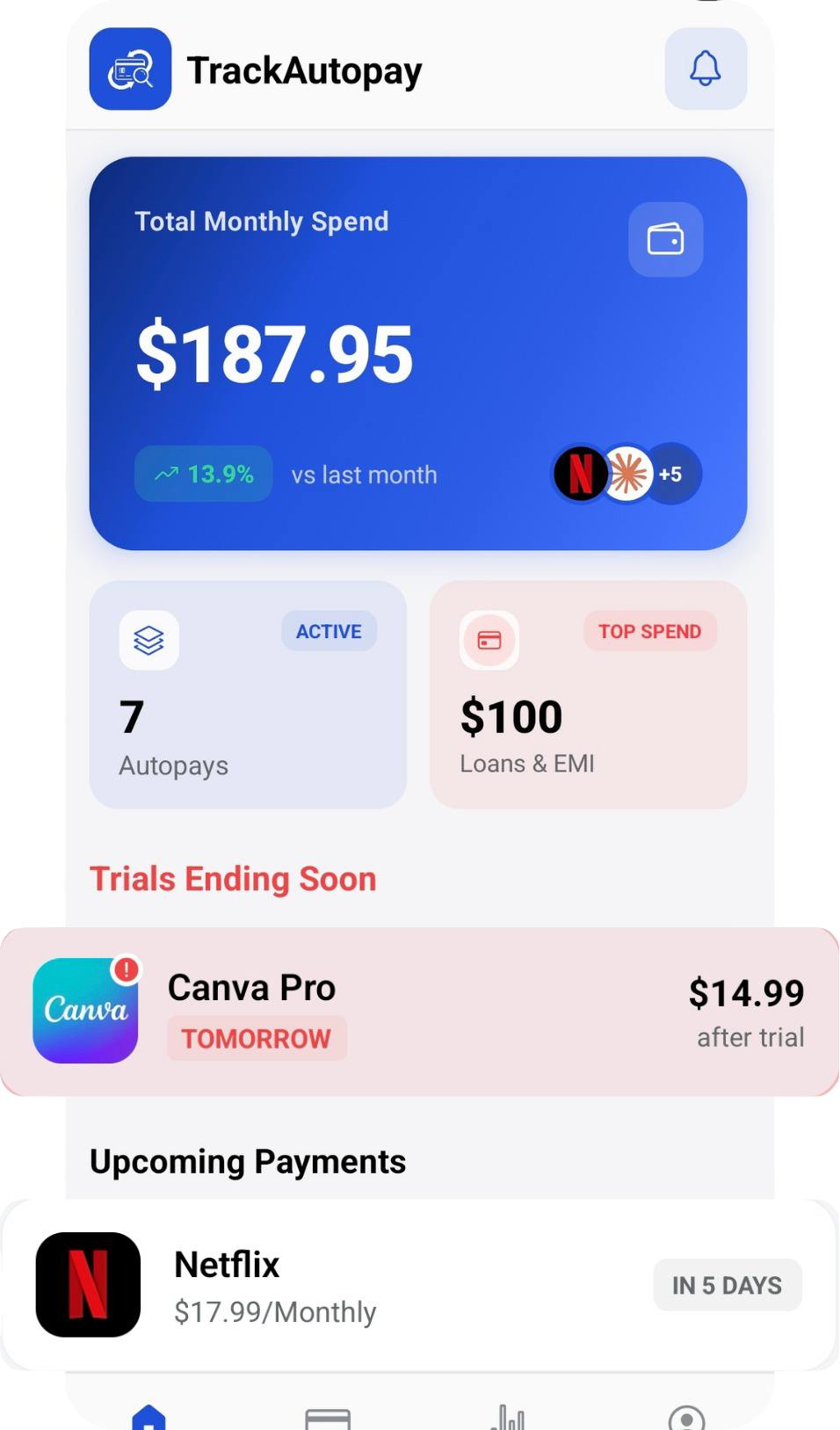
Add the discounted price and the date it reverts to TrackAutoPay the same way you would log any subscription's renewal date. You get a reminder before that date arrives, so you can decide whether to cancel, call for another discount, or simply accept the new price, on your own terms instead of finding out three months later.
Never Let a Discount Expire Without You Noticing
Log every subscription, including the discounted ones, with a reminder before the price reverts. See every renewal date in one dashboard instead of guessing.