1What the Rule Was Supposed to Do
The FTC's click-to-cancel rule was built around one simple idea: if a company lets you sign up for a subscription with a couple of clicks, it should let you cancel that subscription just as easily. No phone calls you have to make during business hours, no forced chat with a "retention specialist," no maze of menus designed to make you give up.
That idea came from years of complaints about companies that made signing up effortless and cancelling deliberately painful. The rule would have made this a legal requirement for millions of businesses that sell subscriptions and recurring memberships in the US.
Europe has been moving toward the same goal on a separate track, though the EU's new cancel button and the delayed UK rules turn out to be narrower than the headlines suggest.
2Why a Court Struck It Down
On July 8, 2025, the 8th Circuit Court of Appeals vacated the click-to-cancel rule. It's important to understand exactly why, because it changes what you should expect next.
The court did not decide that easy cancellation was a bad idea. It ruled on a procedural problem: before issuing a rule like this, the FTC is required by law to do a cost-benefit analysis, weighing the rule's impact on businesses against the benefit to consumers. The court found the FTC skipped that required step. Because the process wasn't followed correctly, the whole rule was thrown out, regardless of what the rule actually said.
Note: A rule being vacated for a procedural reason is very different from a rule being rejected on the merits. This is closer to a paperwork problem than a verdict that easy cancellation shouldn't be required.
3What Still Protects You Today
Even without the click-to-cancel rule, you are not unprotected. The FTC continues to go after companies that trap people in subscriptions, using two tools that were never tied to the vacated rule in the first place:
- Section 5 of the FTC Act, which bans unfair and deceptive business practices in general, including dark patterns that make cancellation confusing on purpose
- ROSCA (the Restore Online Shoppers Confidence Act), a federal law that requires clear disclosure of subscription terms, your clear consent before being charged, and a simple way to stop future charges
Both of these laws existed before the click-to-cancel rule and are unaffected by the court's decision. The FTC has kept bringing enforcement actions under Section 5 and ROSCA against companies with deceptive sign-up or cancellation practices.
4State Laws Already in Effect
While the federal rule was tied up in court, several states moved ahead with their own protections. These laws don't depend on what the FTC does and are already in force:
| Protection | Status | What It Covers |
|---|---|---|
| FTC Act, Section 5 | In effect, federal | Bans unfair and deceptive practices, including dark patterns |
| ROSCA | In effect, federal | Requires clear terms, consent, and an easy way to stop charges |
| California auto-renewal law (amended) | Effective July 1, 2025 | Requires simple cancellation for auto-renewing subscriptions |
| Massachusetts auto-renewal regulation | Effective Sep 2, 2025 | Requires simple cancellation for auto-renewing subscriptions |
Many national subscription companies apply their easiest cancellation flow to all customers rather than building separate processes state by state, so these laws often end up helping people outside those states too.
The court didn't decide that easy cancellation was a bad idea, it decided the FTC skipped a legally required step before making it a rule.
5What's Next: The FTC's New Proposal
The FTC has not dropped the issue. In January and March of 2026, it submitted a draft Advance Notice of Proposed Rulemaking, usually shortened to ANPRM, on what it calls the Negative Option Rule. A "negative option" is simply a subscription or membership that keeps charging you unless you actively cancel it, which is exactly what the click-to-cancel rule was aimed at.
An ANPRM is an early step. It means the FTC is asking the public, including businesses and consumers, for input before it writes an actual new rule. This time, the process is designed to include the cost-benefit analysis that was missing before, which should make a future rule harder to challenge in court on the same grounds.
Note: There is no confirmed date for when, or if, a new rule will take effect. This kind of rulemaking process typically takes months to years. Don't wait for a new federal rule to protect yourself, use the steps below right now instead.
6How to Cancel a Subscription Right Now
You don't need to wait on Washington to get out of a subscription you don't want. Here's a practical approach that works today, federal rule or not.
Step 1: Check the company's own cancellation page first
Look for a "Manage subscription" or "Cancel" option in your account settings before calling anyone. Many companies already comply with state laws or ROSCA and offer a straightforward online cancel button.
Step 2: If it's hard to find, ask for it in writing
Example scenario: if a company only offers cancellation through a phone call during limited hours, send a cancellation request through email or the app's chat support instead, so you have a written record of the date you asked.
Step 3: Cancel the payment method as a backup
If a company keeps charging you after you've clearly asked to cancel, you can block future charges directly with your bank or card issuer, and you can dispute any charge that comes through after your cancellation request as unauthorized.
Step 4: Report the company if it refuses to cooperate
A company that ignores a clear cancellation request or makes cancelling deliberately confusing may be violating Section 5 of the FTC Act or ROSCA, and possibly your state's auto-renewal law too. You can file a complaint with the FTC at reportfraud.ftc.gov, or with your state attorney general's office.
7Track Every Subscription in One Place
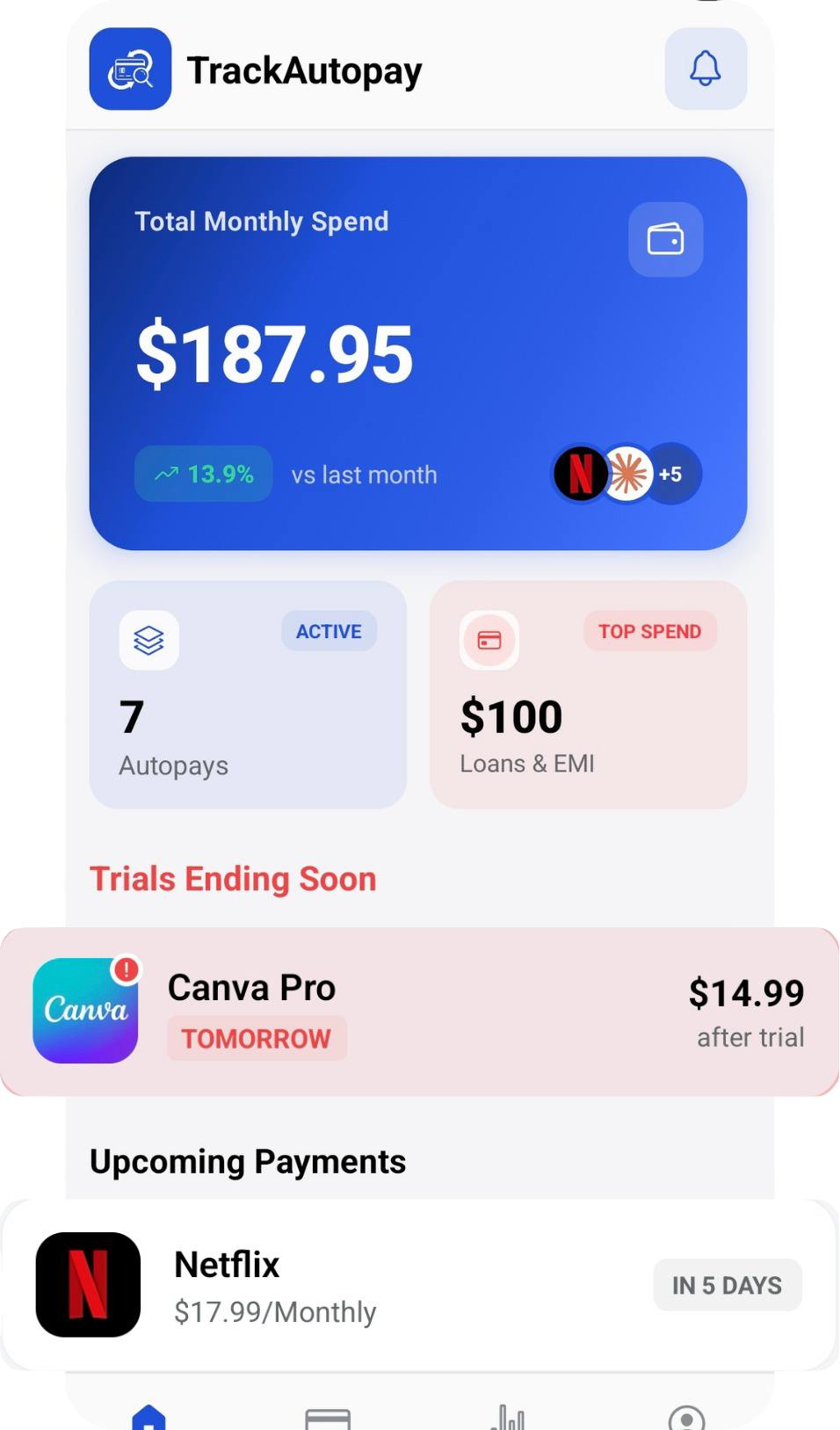
A big part of the problem the click-to-cancel rule tried to solve is that people lose track of what they're even paying for. Whatever happens with federal rulemaking, the fastest way to avoid a surprise renewal is to know every subscription you have before the next charge hits.
TrackAutoPay helps you build one clear list of your recurring charges and reminds you before a renewal date, so you have time to decide and cancel before you're billed again, instead of finding out after the money is already gone.
Never Miss a Renewal Date Again
See every subscription in one place and get a reminder before you're charged, so you always have time to cancel.