1What Came Into Force in June 2026
If you have shopped online in the European Union recently, you may have noticed a new button appearing in account pages and order confirmations. It comes from Directive (EU) 2023/2673, which requires traders selling online to give consumers a clearly labelled way to withdraw from a contract without hunting for it.
The obligation applies from 19 June 2026. Member states had until 19 December 2025 to put it into their own national law, so the exact wording and placement you see depends on the country you are buying from.
This is a genuine improvement. It is also much narrower than most of the coverage suggests, and the gap between what people think they got and what they actually got is worth understanding before you rely on it.
2#1: What the Button Does Cover
European consumers have had a 14-day right of withdrawal on distance contracts for years. Sign up for something online, change your mind within 14 days, and you can back out. The right was never the problem. Using it was.
Companies could bury the process behind a support email address, a postal form, or a phone number with a queue. The new requirement removes that friction for contracts made online. The withdrawal function has to be easy to find and easy to use, and it has to work in the same place you signed up.
Did you know? The principle regulators keep repeating is that leaving should be about as easy as joining. The button is the first piece of that idea written into law across the EU as a specific, testable requirement rather than a general expectation.
3#2: What It Does Not Cover
Here is the part that matters most. The button exists to let you exercise the 14-day withdrawal right. It is tied to that window, which starts when the contract is concluded. It is not a general right to end any subscription at any time with one click.
So the streaming service you joined two years ago is not covered by it. Neither is the software plan you renewed last month, or the gym contract with a minimum term. For those, your rights come from the contract you agreed to and from your country's general consumer law, exactly as they did before June 2026.
Free trials are the sharpest example. If a trial runs 30 days and the 14-day withdrawal window starts at sign up, the window can close before you are ever charged. The button will not help you there, which is why a reminder you set yourself still does more work than the law does.
The cancel button covers the 14 days after you sign up, not the two years after that. Most forgotten subscriptions live in the second group.
4#3: Why the Headlines Are Misleading
A lot of the coverage calls this a one-click cancellation rule for subscriptions. That framing is easy to write and easy to share, and it has left plenty of people believing they now have a right they do not have.
The practical risk is that you stop doing the thing that actually protects you. If you assume every subscription is one tap from gone, you stop noting renewal dates and stop reading price change emails. Then a charge lands, you go looking for the button, and it is not there for your situation.
Read any claim about this rule with one question in mind: does it apply within 14 days of signing up, or after? If the answer is after, the button is not the tool.
5#4: The UK Rules Are Coming, Not Here
The United Kingdom is not covered by the EU directive, and it is building its own subscription regime under the Digital Markets, Competition and Consumers Act. On paper it goes further than the EU button: clearer information before you sign up, reminders before an auto-renewal, and cancellation rights including a cooling-off window when a trial or a longer term rolls over.
None of that applies yet. The start date has slipped more than once, first from spring 2026, then autumn 2026. Following the UK government's consultation response of 2 April 2026, the subscription contracts regime is now expected to come into force in spring 2027.
So if you are in the UK reading about mandatory renewal reminders, they are a future protection, not a current one. Until the regime starts, you are working with existing consumer law and whatever the company chose to put in its own terms.
6#5: What Is Still Only a Proposal
The European Commission has a further initiative in the works, the Digital Fairness Act, aimed at misleading online design, pressure tactics during cancellation, and subscriptions that are hard to leave. It is the piece that would address ongoing subscriptions rather than just the first 14 days.
As of September 2026 it is still expected to be proposed rather than agreed and in force. A proposal has to be negotiated, adopted, and then applied, which takes years. Nothing in it protects you today.
Here is how the three sit against each other right now.
| Rule | Where | Status in September 2026 |
|---|---|---|
| Withdrawal button | EU | Applies from 19 June 2026 |
| DMCC subscription regime | UK | Expected spring 2027 |
| Digital Fairness Act | EU | Still expected as a proposal |
7#6: Cancelling Past the 14 Days
Most of the subscriptions you want to end are older than two weeks, so this is the sequence that actually gets used.
- Check the renewal date and any notice period in your account settings before you do anything, so you know what you are working against.
- Cancel inside the account area where you signed up. That is the route companies are least able to argue with later.
- Screenshot the confirmation screen, with the date visible, before you close the tab.
- Keep the confirmation email. If none arrives within a day, send the company a short written message stating you have cancelled and asking them to confirm.
- Watch the next billing date. A cancellation that did not register looks exactly like a normal renewal on your statement.
- If you are charged after cancelling, go to the company first with your evidence, then to your bank or card issuer if they do not fix it.
If a charge does slip through, our guide on disputing a charge you did not agree to covers what to tell your bank and what proof to keep.
8#7: The Habit That Works Either Way
Rules in Europe are moving in your favour, slowly and unevenly, and none of them will tell you which subscriptions you currently pay for. That part stays yours. A renewal reminder you control works the same in Dublin, Berlin or Manchester, and it does not depend on a start date slipping by another year.
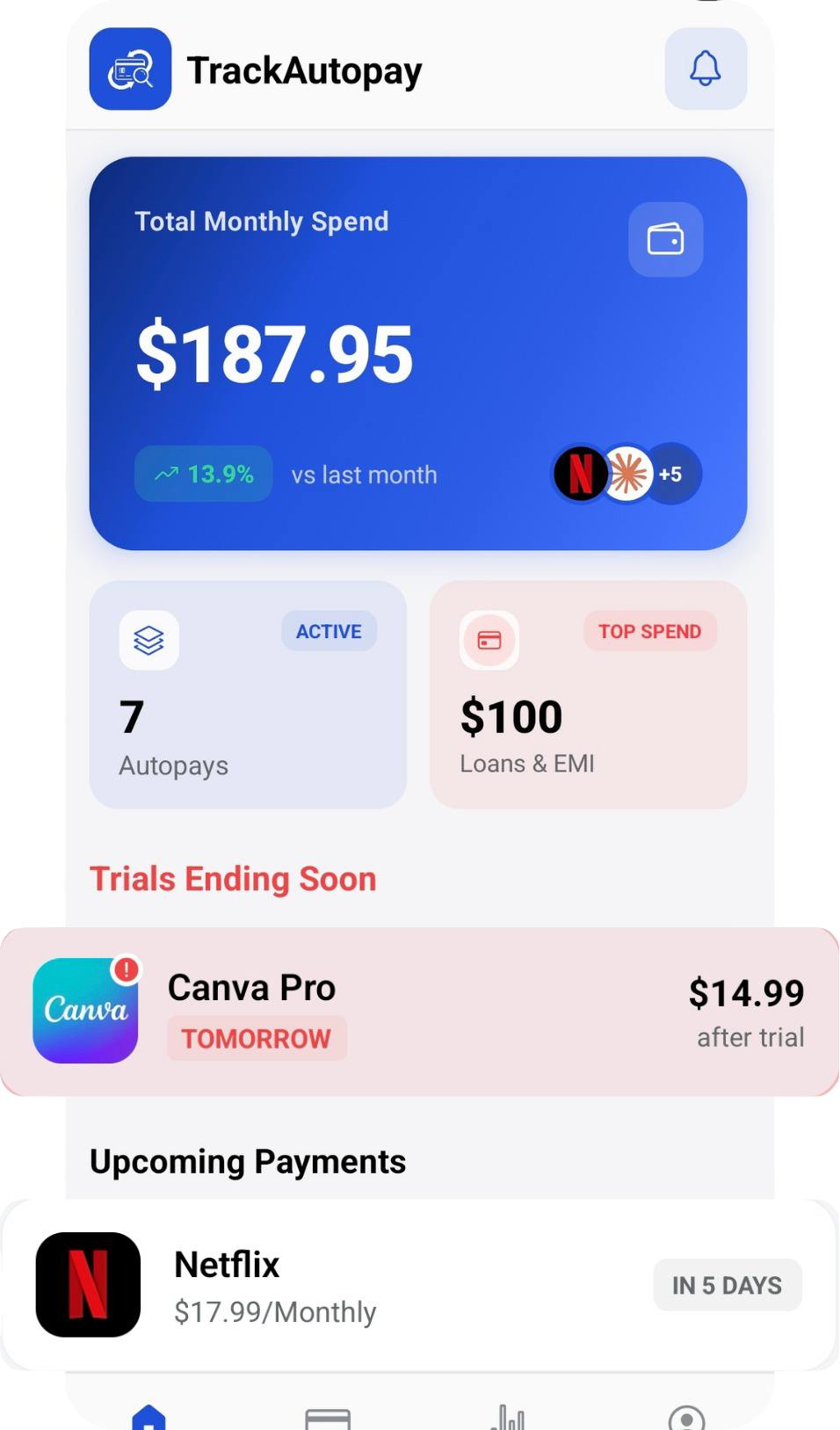
Add each subscription to TrackAutoPay with its price and renewal date, including anything still inside a trial. You get a reminder while you can still act, whether that is the 14-day withdrawal window or a notice period buried in the terms.
Know Every Renewal Date Before It Arrives
Keep every subscription and trial in one list with a reminder ahead of each charge, wherever you happen to live.