1What Is "Binge and Cancel"?
Reporters at Fortune, eMarketer, and other outlets have given a name to a pattern that has quietly become normal among younger streamers: sign up for a service to watch one specific show or season, finish it, then cancel or pause the subscription. No long-term loyalty to any single platform, no service left running "just in case."
About 80% of Gen Z (ages 18 to 29) video streaming users say they have done exactly this at least once: joined a service purely to watch one show, then walked away once it was over. For a generation that grew up with a dozen streaming options competing for the same wallet, treating a subscription like a rental instead of a permanent bill makes a lot of sense.
2The Numbers Behind the Trend
A handful of numbers from 2026 surveys of Gen Z streaming habits explain why "binge and cancel" has become common enough to get its own name:
| What the data shows | Share of Gen Z |
|---|---|
| Report feeling streaming fatigue | 87% |
| Hold 3+ streaming subscriptions at once | 56% |
| Hold 2 streaming subscriptions at once | 28% |
| Have signed up for a service to watch one show, then canceled or paused | ~80% |
| Canceled a service since Dec 2025 for feeling overwhelmed | 37% |
| Plan to cancel a service soon for the same reason | 29% |
| Would accept 2x the ads for a lower price | 49% |
| Already use an ad-supported tier | 52% |
Note: the $69-a-month, roughly $828-a-year average streaming spend covers American streaming users overall, not Gen Z specifically. Still, it shows why every dollar spent on a subscription that finished its job weeks ago matters.
3Fatigued, But Still Subscribed
Here is the part that looks confusing at first glance. Almost 9 in 10 Gen Z streamers say they are tired of managing so many subscriptions. Yet more than half still keep three or more running at the same time. If the fatigue is real, why not just cut down to one or two services and stop there?
The answer is that content is spread across platforms, not concentrated on one. A must-watch show can land on any service, so watching everything you care about while paying for nothing you don't means constantly adding and dropping subscriptions rather than settling on a fixed set. That is the entire idea behind "binge and cancel": it's not that Gen Z wants fewer services, it's that they want to control exactly when each one is active.
87% of Gen Z say streaming has worn them out. Yet 56% still keep three or more subscriptions running at once.
4Why This Is Actually a Smart Habit
Treating a streaming subscription like a rental, active for a month, then off, is a reasonable answer to rising prices and shrinking free time. It has real upsides:
- You only pay for months you actually use the service
- It puts a natural cap on how many subscriptions run at once
- It forces a regular check-in on what you are paying for, instead of letting charges run on autopilot
- It matches how content actually gets released, one show at a time, across different platforms
It also explains why 37% of Gen Z streaming subscribers canceled at least one service since December 2025 because they felt overwhelmed, and 29% said they planned to do the same soon. That is not disloyalty to any brand, it is discipline about spending.
5Ads Over Higher Prices
The other half of Gen Z's cost-cutting strategy is the ad-supported tier. 52% of Gen Z streamers already use one to keep their bill down, and 49% say they would accept twice as many ads in exchange for a lower price. Combined with binge and cancel, the message to streaming companies is clear: keep the price reasonable and flexible, or Gen Z will simply watch less of your service, or none at all.
6Where the Strategy Breaks Down
Binge and cancel only saves money if the canceling part actually happens. The whole strategy depends on remembering to cancel right after the season finale, not "sometime this week" or "before the next bill." A free trial or a promotional month that quietly rolls into a full-price renewal wipes out the entire point of the habit.
Example scenario: you sign up for a service to watch one season over a long weekend, then get busy with school, work, or life for the next two weeks. By the time you remember to cancel, you've already been charged for a full extra month you never used.
Did you know? This is exactly the gap that turns a smart habit into wasted money: not a lack of discipline about signing up, but a lack of a system for remembering to cancel on time. Our step-by-step checklist for cancelling subscriptions and autopay covers exactly how to close that gap.
7How to Make Binge and Cancel Actually Work
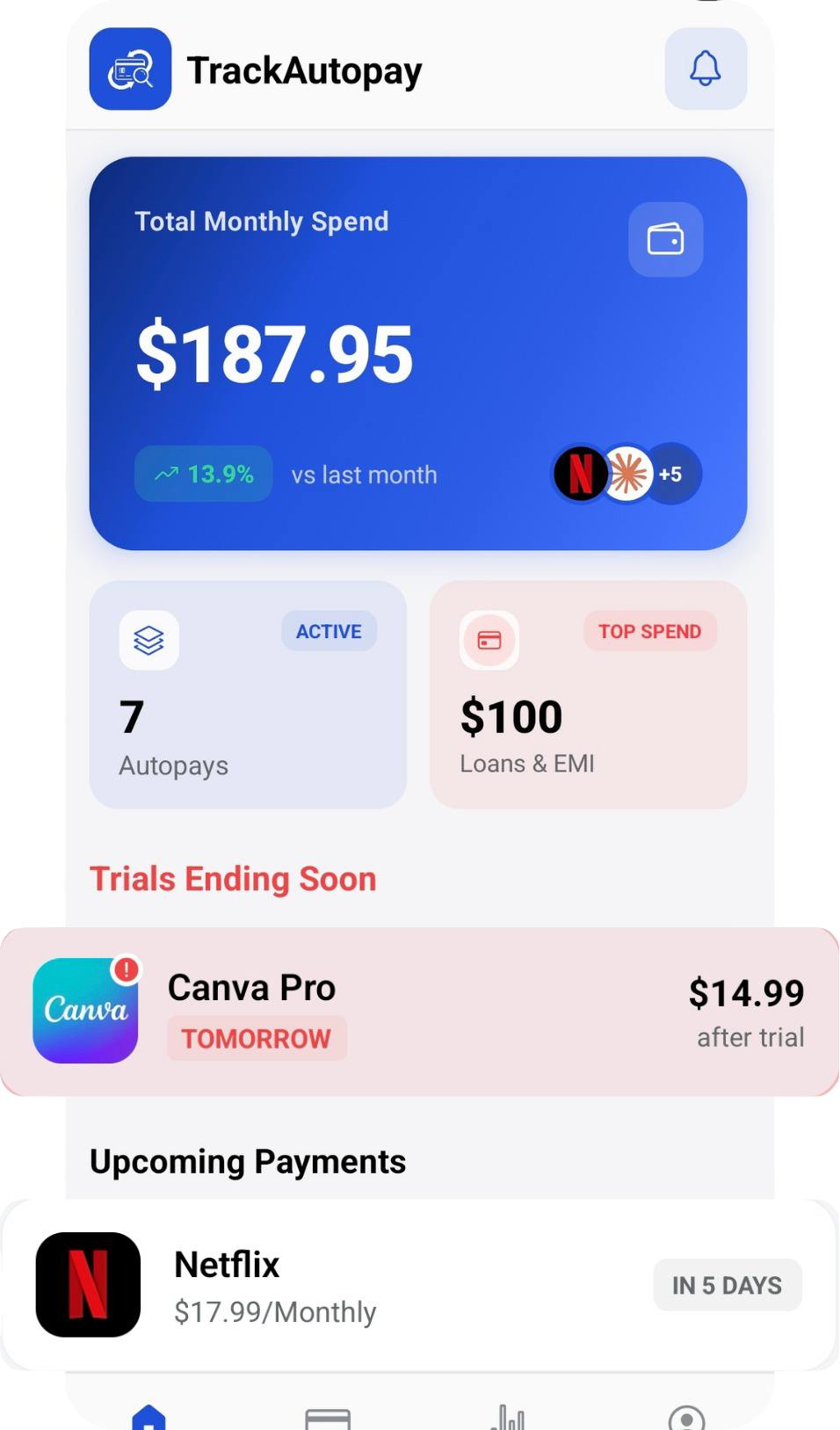
The fix is not to stop binge and cancel, it's a genuinely smart way to manage streaming spending. The fix is to make canceling as automatic as the sign-up was. TrackAutoPay lets you log every streaming subscription the moment you start it and set a reminder before it renews, so you get a nudge the day before a trial or paid month ends instead of finding out after the charge already went through.
Never Miss a Cancel Window Again
Log every streaming subscription and get a reminder before each one renews, so binge and cancel actually saves you money.